

What is a herniated disc?
In a herniated disc, tissue from the inside of the intervertebral disc escapes and can press on a nerve root. This often causes pain radiating from the back into the leg (sciatica) or from the neck into the arm. Most herniated discs settle within weeks with conservative treatment.
Typical symptoms
- Pain radiating from the back into the leg or arm
- Tingling or numbness in the leg, foot, arm or hand
- Pain when coughing, sneezing or sitting
When to seek help immediately: If you develop weakness or paralysis, numbness in the genital or buttock area (“saddle anaesthesia”) or problems passing urine or stool, call us immediately or go to an emergency department.
How we treat it
- Understand: examination, MRI findings and – if needed – a diagnostic injection.
- Strengthen: pain therapy, physiotherapy and targeted exercise.
- Targeted treatment: image-guided injection directly at the irritated nerve root.
- Endoscopic surgery: only when necessary – through an incision of a few millimetres.
Does a herniated disc need surgery?
In most cases, no. Surgery is indicated for progressive weakness, bladder or bowel dysfunction, and persistent nerve pain that does not respond to physiotherapy, medication and injections.
What a disc herniation looks like on MRI
On MRI, the spinal fluid appears bright, while discs and bone appear darker. The arrows show the herniation – on the left in the longitudinal section from the side, on the right in the cross-section.
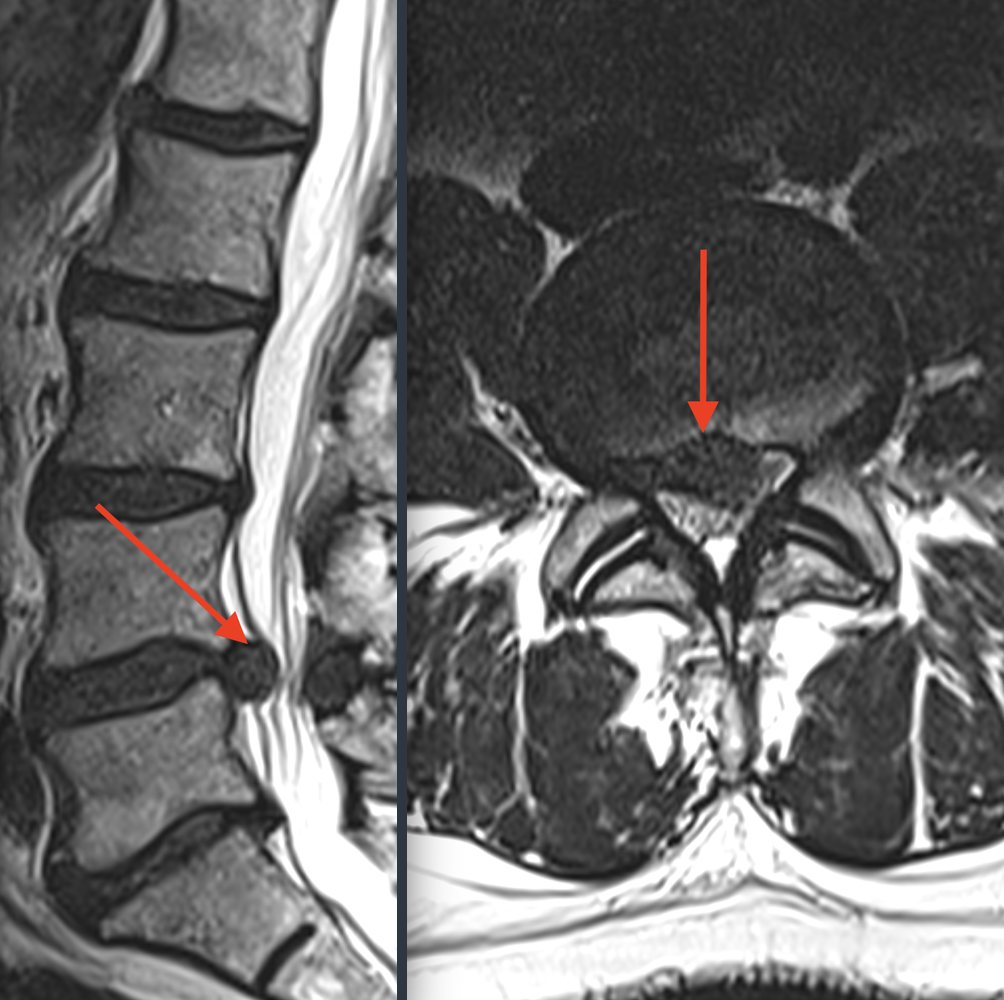
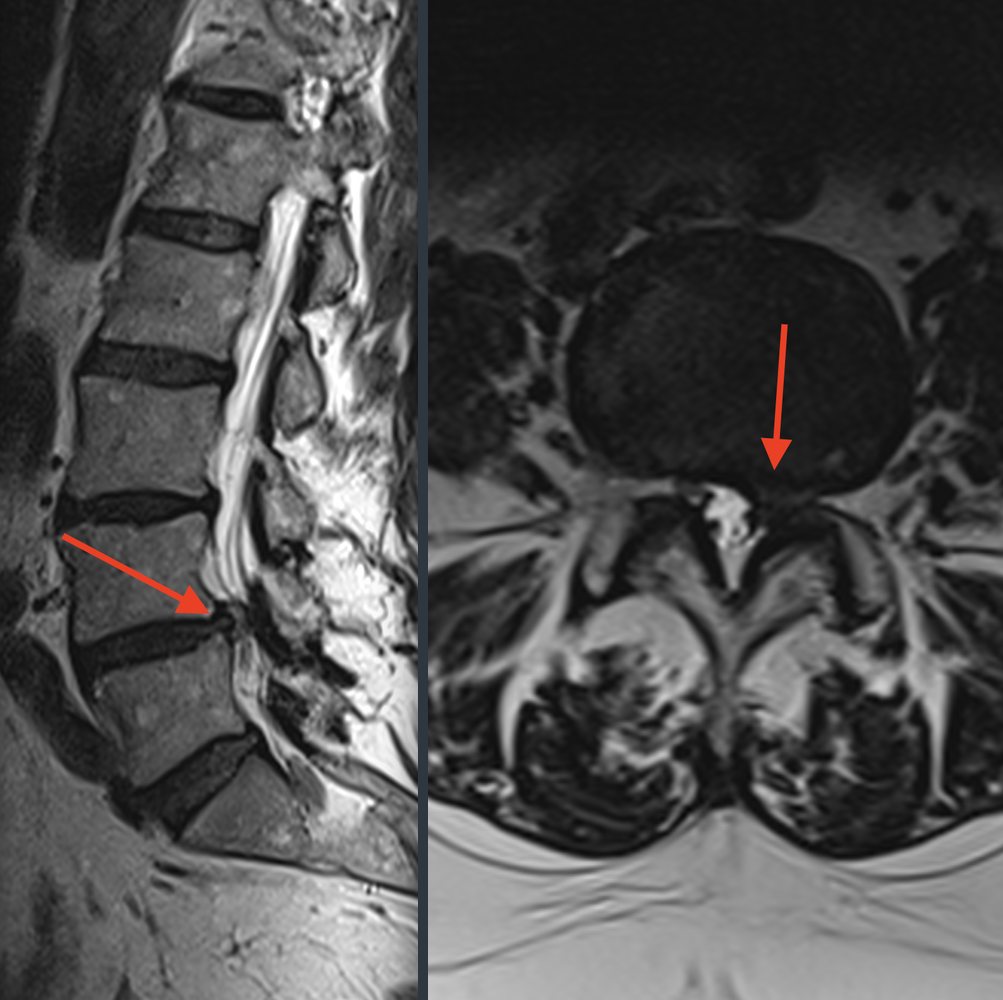
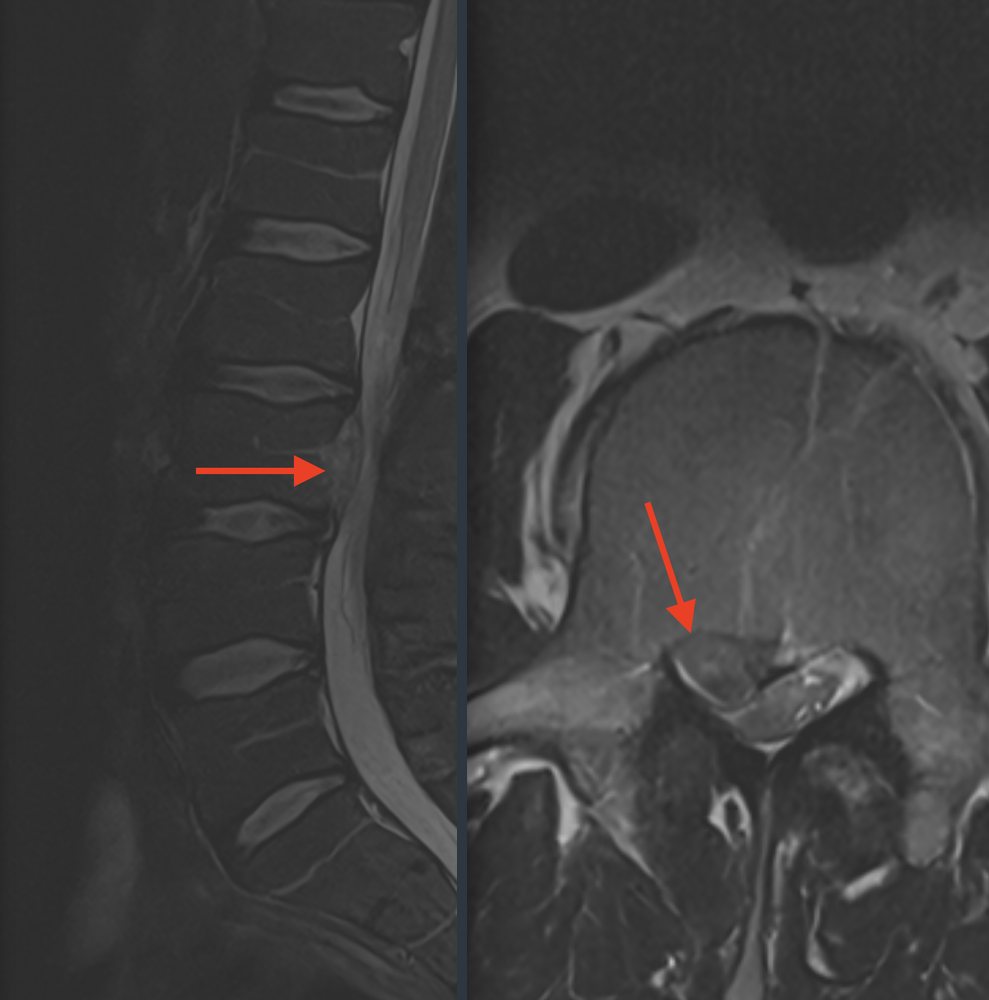
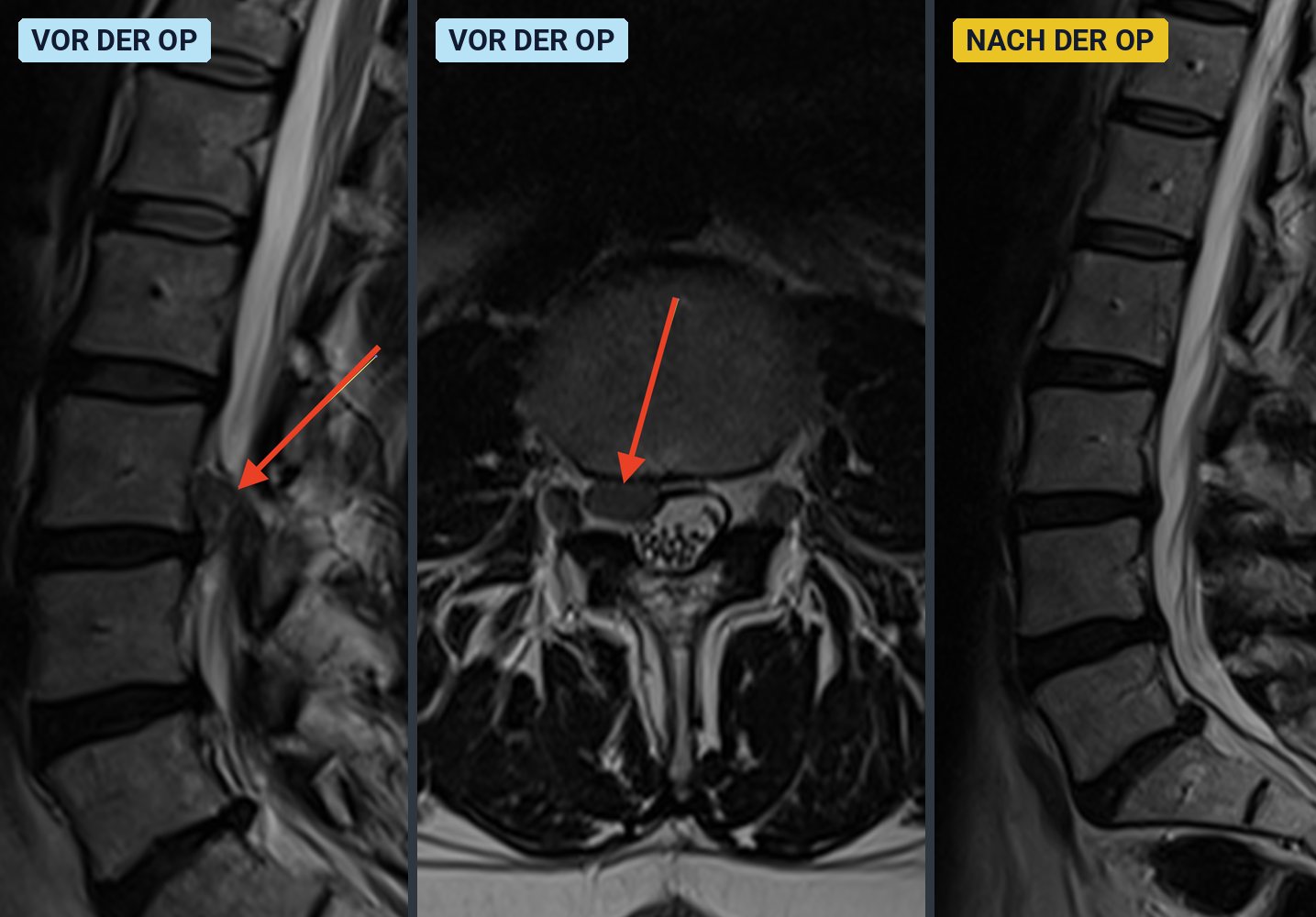
Anonymised images from our practice. How to read your own MRI is explained in our guide How do I read my spinal MRI?
How we remove the herniation endoscopically
Through a skin incision of about 8 mm, we guide a working sleeve with a camera from the side through the neural foramen to the herniation. The muscles are only pushed aside, not detached. The tissue pressing on the nerve is removed under direct vision – the healthy disc is preserved. During the operation you lie on your stomach; the illustration is oriented the same way.
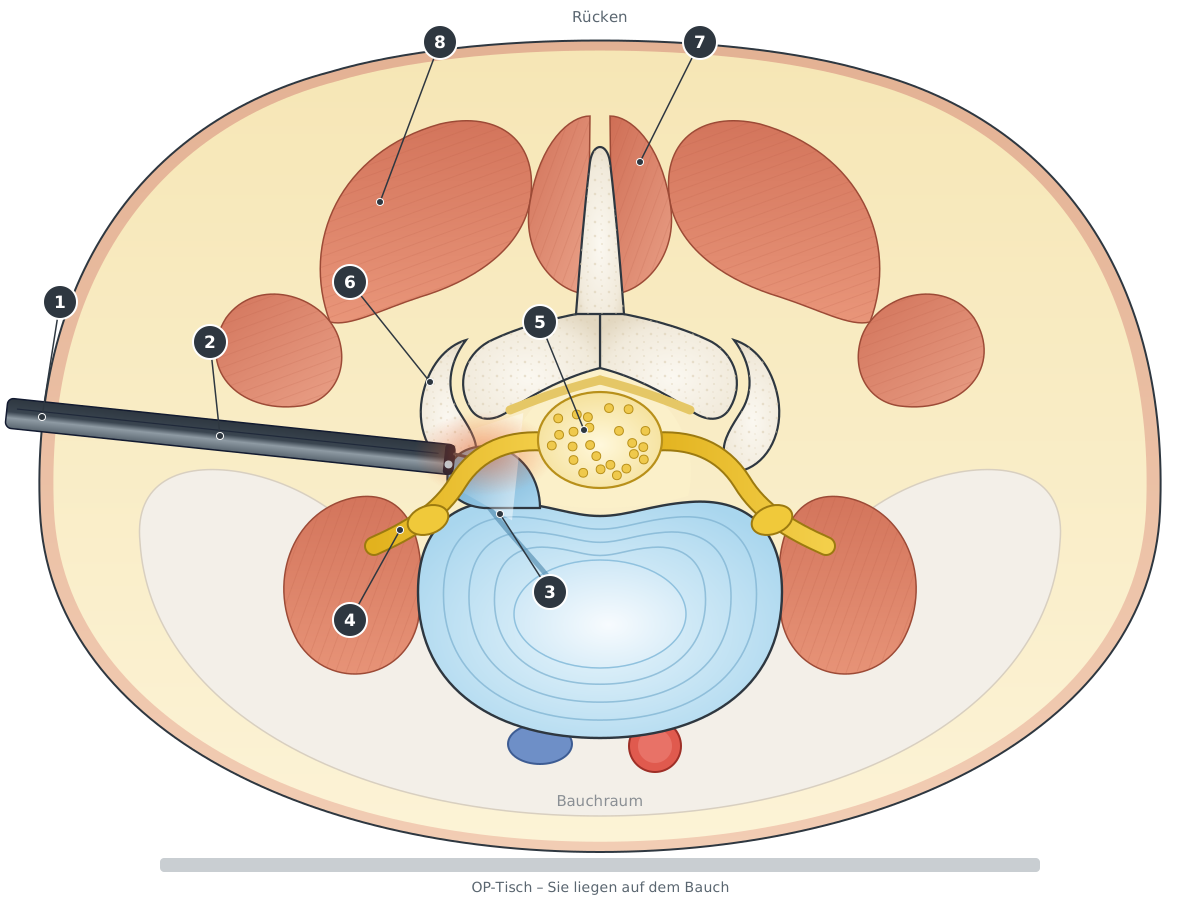
- Small skin incision (approx. 8 mm)
- Working sleeve with camera and instruments
- Herniated disc
- Compressed nerve root
- Nerve canal with nerve fibres
- Facet joint
- Deep back muscles (multifidus)
- Erector spinae
More about the procedure: Endoscopic spine surgery.
After surgery
What you may do again after disc surgery and when – from showering and work to sport – and which exercises help you in which phase can be found on our page for patients after surgery: Your way back: timeline, exercises and everyday tips.
Updated: November 2026 · spectrum MED practice, Sendlinger Straße 37, Munich. This article does not replace a medical examination.