Back pain is one of the most common complaints and can affect people of any age. Our specialists in orthopaedics and trauma surgery find out whether the cause lies in the muscles or whether a serious condition is behind it. The treatment plan is based on this.
How back pain develops
Pain receptors (nociceptors) in the muscles, ligaments, joints and bones of the spine detect harmful stimuli. Nerve fibres carry the signals via the spinal cord to the brain, where they are processed and perceived as pain. In chronic back pain this processing can change – which is why chronic pain is treated differently from acute lumbago.
Acute or chronic?
Acute back pain lasts up to six weeks and usually gets better on its own. If it persists for more than three months, it is considered chronic. We then follow the biopsychosocial model and look not only at physical factors but also at psychological ones (stress, anxiety, coping) and social ones (work, family).
Common causes
Muscular causes include tension, strains, weak core muscles, poor posture and overuse. Conditions of the spine can also cause back pain:
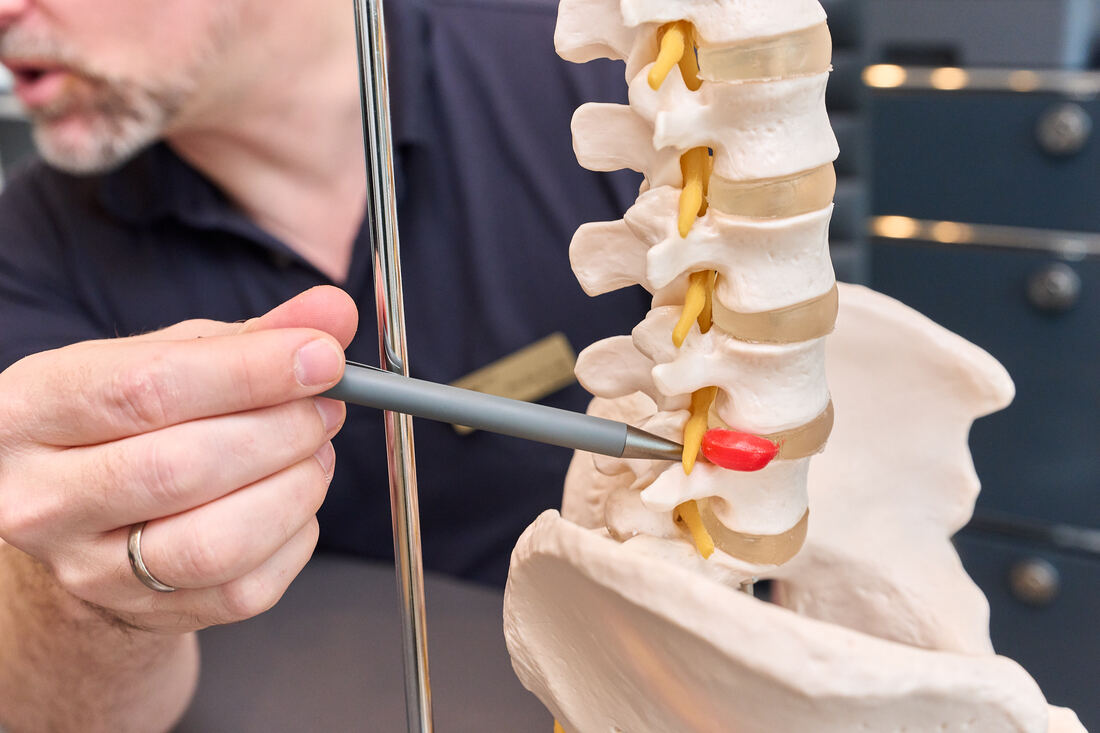
- Herniated disc and disc bulges, usually in the lumbar spine
- Spinal stenosis with a shrinking walking distance
- Facet joint syndrome (osteoarthritis of the vertebral joints)
- Multifidus dysfunction: the deep back muscle is no longer controlled properly
- Sacroiliac joint pain with pain in the lower back
- Vertebral slippage (spondylolisthesis) and scoliosis
- Osteoporosis with vertebral fractures
- Inflammatory conditions such as rheumatism
The hip joint and the tailbone can also cause symptoms that feel like low back pain.
Muscular or a sign of disease?
A localised, dull, pulling pain that improves with rest, warmth and movement suggests a muscular cause. Pain radiating into the leg, numbness and tingling, pain at night and long-lasting symptoms suggest an underlying condition.
Seek medical advice immediately: Loss of strength in the leg, numbness in the saddle area, and bladder or bowel problems.
Treatment
Most back problems can be treated gently and without surgery.
Conservative
- Physiotherapy, targeted exercises and active exercise therapy
- Medication
- Heat and cold therapy
- Acupuncture and dry needling for muscle tension
- Pain psychotherapy
Interventional and minimally invasive (outpatient, at the practice)
- Injections at the nerve root or facet joint
- Radiofrequency therapy to deactivate pain fibres
- Neuromodulation for treatment-resistant pain
Surgical (in severe cases)
Decompression, endoscopic procedures and stabilisation. Surgery is indicated for progressive paralysis, bladder or bowel dysfunction, uncontrollable nerve pain or spinal stenosis that permanently limits walking distance. If you have already been advised to have surgery, we review that recommendation independently – imaging findings and symptoms often do not match.
Prevention
Strengthen your core muscles, change your sitting position regularly, lift loads with your legs and increase activity gradually. Exercise is the single most effective measure.
Frequently asked questions
- What helps quickly with acute back pain?
- Warmth, movement within the pain-free range and short-term pain medication. Bed rest delays healing. If the pain has not changed after two weeks, the cause should be investigated.
- When to see a spine specialist?
- If pain radiates into your leg, you notice numbness or weakness, or symptoms persist for weeks.
- Can gout cause back pain?
- Rare, but possible: uric acid crystals can deposit in the vertebral joints or the sacroiliac joint. This is assessed with blood tests and imaging.
Updated: November 2026 · spectrum MED practice, Sendlinger Straße 37, Munich. This article does not replace a medical examination.