

A knee specialist determines whether knee pain comes from the meniscus, ligaments, cartilage, kneecap or arthritis – and treats it specifically. At spectrum MED in Munich you are cared for by specialists in orthopaedics and trauma surgery with extensive experience in sports injuries, joint-preserving therapy and Knee arthroplasty. Our goal: to preserve your own knee joint for as long as possible.
At a glance
- Meniscus tear, cruciate ligament tear, cartilage damage, kneecap, knee arthritis
- Ultrasound examination directly in the practice, MRI if needed
- Hyaluronic acid, platelet-rich plasma (PRP), shockwave, targeted muscle building
- Arthroscopy and knee replacement – only when necessary
- Independent second opinion before knee surgery
When should you see a knee specialist?
- if the knee swells immediately or gives way after an injury,
- if it locks or "catches",
- if knee pain lasts longer than two to three weeks or occurs at night,
- if climbing stairs, kneeling or running become increasingly difficult,
- if you have been advised to have knee surgery.
- 1Thigh bone (femur)
- 2Articular cartilage
- 3Meniscus (medial and lateral meniscus)
- 4Cruciate ligaments
- 5Shin bone (tibia)
Knee problems we treat
- Meniscus tears and degenerative meniscus damage
- Cruciate ligament tears and injuries of the collateral ligaments
- Cartilage damage and bone marrow oedema
- Kneecap problems, kneecap instability
- Knee osteoarthritis (gonarthrosis) and malalignment such as knock knees or bow legs
- Tendon irritation such as patellar tendinopathy ("jumper's knee")
- Sports injuries and injuries after accidents at work
Read more about causes and self-help in our guide to knee pain.
Treatment without surgery
- 1UnderstandConsultation, examination, imaging, diagnostic injection if needed
- 2StrengthenPhysiotherapy, training, medication, load management
- 3Targeted treatmentInjections, radiofrequency, shockwave, regenerative procedures
- 4Surgeryonly when necessary – as minimally invasive as possible
Most knee problems can be treated well without surgery: with physiotherapy, strength and coordination training, load management, hyaluronic acid for arthritis, platelet-rich plasma (PRP) for cartilage and tendon problems, and shockwave therapy for irritation at tendon insertions. Together we decide how success will be measured.
When knee surgery makes sense
For a trapped meniscus, a fresh cruciate ligament tear with instability, large cartilage defects or advanced arthritis with severe symptoms. Many procedures are performed arthroscopically. For arthritis, a partial knee replacement (unicompartmental) or total knee replacement may be considered – more under Knee replacement.
Good to know: A degenerative meniscus tear without locking usually does not need surgery. In studies, targeted training is often just as effective as arthroscopy.
Frequently asked questions
- Does a meniscus tear have to be operated on?
- Not always. Wear-related tears without locking are usually treated conservatively. Arguments for surgery are true locking, displaced meniscus fragments and fresh traumatic tears in younger patients.
- Can a knee replacement be postponed?
- Often yes – with muscle building, weight loss, injections and adapted activity, sometimes for years. With severe wear and pain at rest, however, a replacement usually improves quality of life considerably.
- How quickly can I get an appointment?
- Private patients and self-payers usually within three working days. Patients with statutory insurance book online.
- Where is the practice?
- The practice is located in Munich's old town at Sendlinger Straße 37, between Sendlinger Tor (U1, U2, U3, U6, tram) and Marienplatz (S-Bahn, U3, U6) – each just a few minutes' walk away.
Your doctors for this topic
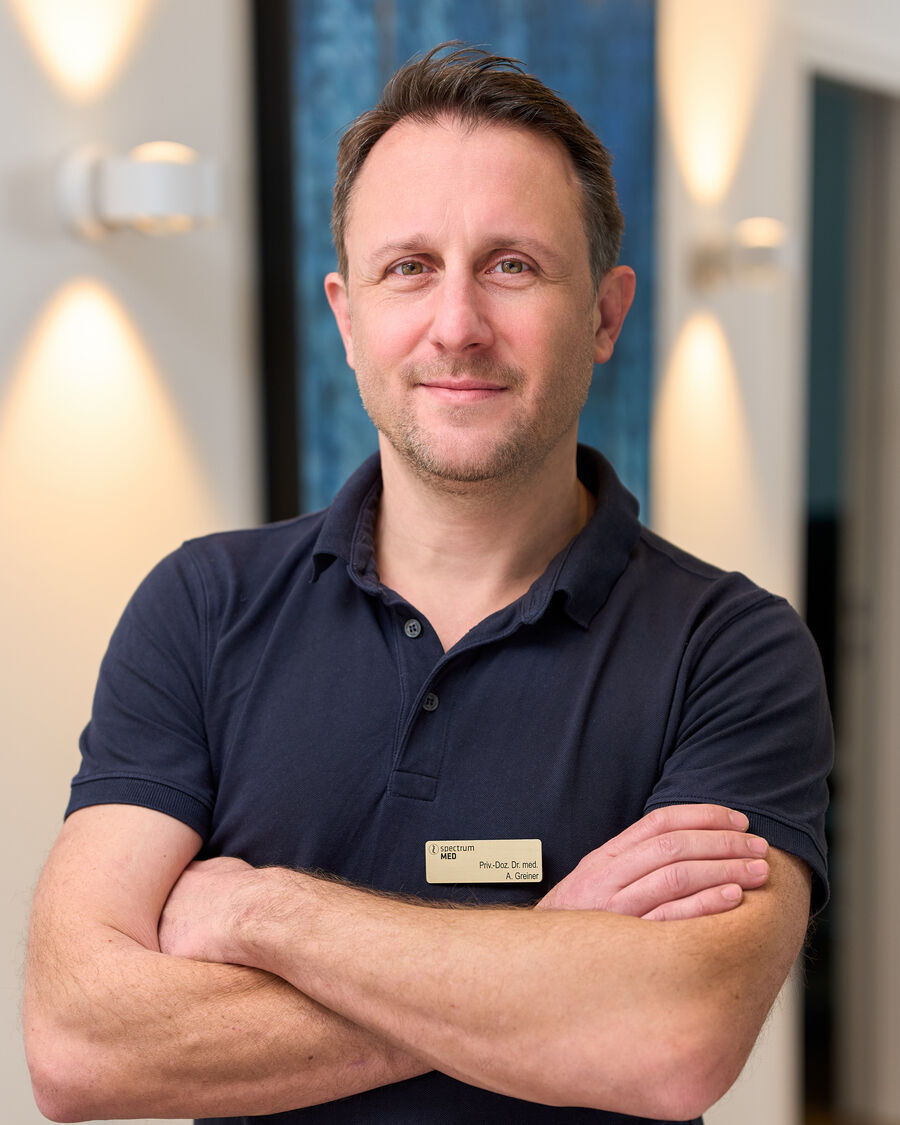 Priv.-Doz. Dr. med. Axel GreinerHip replacement, trauma surgery of the arms, legs and spine
 Prof. Dr. med. Dr. h. c. mult. Joachim GrifkaHip and knee replacement, joint-preserving treatment
 Dr. med. Rüdiger NeitzelHip, knee
 Priv.-Doz. Dr. med. Christoph Linhart, MHBANon-union fractures, trauma surgery, work and commuting accidents (BG)
Updated: November 2026 · spectrum MED practice, Sendlinger Straße 37, Munich. This article does not replace a medical examination.