
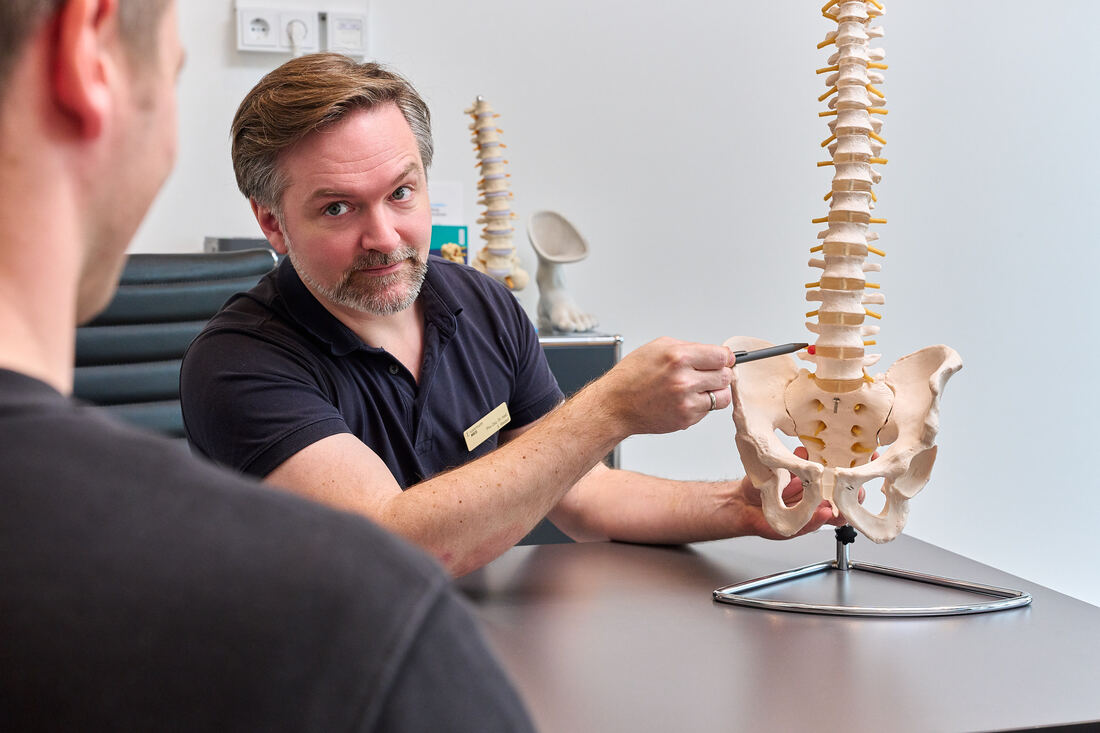
The artificial hip joint is one of the most successful operations in medicine. In advanced Hip osteoarthritis (coxarthrosis), avascular necrosis of the femoral head or malalignment, it replaces the socket and head of the joint. We implant hip replacements via minimally invasive, muscle-sparing approaches , so that most patients get up on the day of surgery. Operations are performed in our partner hospitals in Munich, Arabellaklinik/Herzogpark Klinik and Artemed Klinik München Süd.
At a glance
- For hip arthritis, femoral head necrosis or dysplasia with severe symptoms
- Minimally invasive approach, e.g. from the front between the muscles
- Up on the day of surgery
- Crutches usually only for a few weeks
- Many prostheses last 20 years or longer
When does a hip replacement make sense?
- Groin pain that severely limits walking, sleeping or work
- Markedly restricted mobility, e.g. when tying shoes
- Advanced osteoarthritis on X-ray
- No sufficient improvement with conservative treatment
- 1Hip socket (acetabulum)
- 2Femoral head with cartilage
- 3Artificial socket
- 4Prosthetic head made of ceramic or metal
- 5Prosthetic stem
Minimally invasive hip replacement
With the muscle-sparing approach – for example from the front (anterior approach) – the surgeon works through natural gaps between the muscles instead of detaching them. This usually means less pain, faster mobilisation and a lower risk of dislocation in the early phase. Which approach is best for you depends on anatomy, build and previous operations.
What to expect
- PreparationExamination, X-ray and digital planning of implant size, informed consent and anaesthesia preparation.
- Surgeryunder general or spinal anaesthesia, usually 60 to 90 minutes.
- HospitalUp on the day of surgery, discharge after a few days.
- Rehabilitationoutpatient or inpatient; follow-up visits with your surgeon at our practice.
Get active before surgery: Strong gluteal and thigh muscles before surgery (prehabilitation) noticeably shorten recovery.
Risks
Possible complications include infection, thrombosis, leg length difference, dislocation or loosening over time. With careful planning, muscle-sparing technique and thrombosis prophylaxis, these complications are rare.
Frequently asked questions
- When can I walk normally again after a hip replacement?
- Many patients walk without crutches after two to four weeks. After about three months the hip can usually bear full load in everyday life.
- How long does a hip replacement last?
- Many modern hip replacements last 20 years or longer. A later revision is possible.
- Can I do sport with a hip replacement?
- Yes: cycling, swimming, hiking, golf, cross-country skiing and moderate downhill skiing are usually possible.
- Do I need a second opinion?
- If you are unsure whether or when to have surgery, we are happy to review the recommendation independently. More from our hip specialists.
Your doctors for this topic



Updated: November 2026 · spectrum MED practice, Sendlinger Straße 37, Munich. This article does not replace a medical examination.